
If your brand has always been HFSS-compliant, you probably think January 2026 is someone else’s problem.
You’ve watched Cadbury, Doritos, Mars and Kellogg’s scramble to reformulate. You’ve seen PepsiCo invest millions updating production lines. You’ve read the headlines about “junk food” brands losing promotional space and advertising access.
And you’ve thought:
“Not our problem. We’re compliant. We’re positioned to win.”
Here’s what you’re missing.
The brands scrambling today aren’t your victims.
They’re about to become your most dangerous competitors.
And here’s the part most compliant brands overlook:
Brand-level advertising is exempt from HFSS restrictions — as long as the creative doesn’t depict or uniquely identify an HFSS product.
This means brands with strong assets, deep memory structures and distinctive brand worlds can legally remain present, visible and mentally available — even if much of their portfolio stays HFSS.
Your advantage?
It’s about to disappear.
Because compliance affects product-level activation, not brand-level mental availability.
And competitiveness is built at brand level.
Who this is really for
This isn’t for brands still discussing nutrient profiling.
This is for leaders who believe HFSS works in their favour:
- brands compliant from day one, expecting a newly level playing field
- established “sensible” brands that think HFSS guarantees shelf advantage
- early reformulators who believe being ahead is the win
- once-iconic brands hoping HFSS will drag indulgent rivals back down
If that’s you, you need to understand this:
HFSS restricts HFSS product advertising.
It does not restrict brand advertising.
And that changes everything.
The myth of the HFSS advantage
Right now, many HFSS-affected players are reformulating.
But while compliant brands celebrate, the strategic landscape has shifted.
Most leaders assume HFSS will force indulgent brands off the air.
But brand-level advertising — colours, characters, logos, brand worlds, and all non-identifying assets — remains fully allowed.
Which means the brands with 30 years of built mental availability…
remain mentally available.
Compliance isn’t a moat.
It’s table stakes.
The invisibility problem
Think about the typical “better for you” or “sensible” brand.
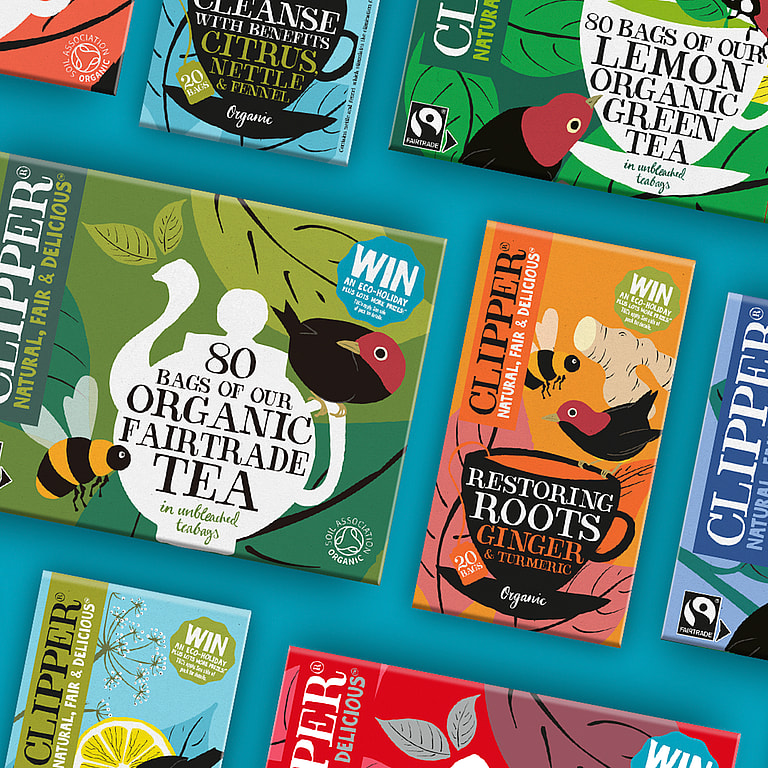
Earth tones.
Muted palettes.
Minimalist layouts.
Copy-heavy packs explaining functional or nutritional benefits.
These brands optimised for credibility.
They never needed to optimise for fame.
But here’s the problem:
HFSS restrictions don’t protect you from famous brands.
They only stop brands from showing HFSS products —
not from showing the brand.
So when a well-known brand appears using its legitimate, non-identifying assets:
- colours
- logos
- brand characters
- shapes
- coded design language
…it triggers the memory structures they’ve been building for decades.
“Better-for-you” brands never built that depth of mental availability.
Now they have to compete with it.
The real shift: brand-level visibility returns
Here’s the legally precise reality.
Under HFSS rules:
✔ Brand advertising is allowed
As long as the ad does not depict or uniquely identify an HFSS product.
✔ Logos, colours, characters and brand worlds are allowed
If they’re not synonymous with a specific HFSS variant.
✔ Brands can feature compliant products in ads
Without risking HFSS breach.
✔ Strategic creativity can keep a brand mentally available
Even if 90% of its portfolio is HFSS.
This means the giants — the ones with decades of memory structures, distinctive assets and recognisable brand worlds — will re-enter the mental space of shoppers.
Legally.
Carefully.
Effectively.
And compliant brands lose their visibility advantage overnight.
Why mental availability beats nutritional superiority
Being healthy helps with rational evaluation.
But brands aren’t built in rational moments.
Byron Sharp’s research is clear:
- mental availability drives brand growth
- physical availability supports it
- rational attributes rarely change behaviour
HFSS compliance helps with placement — where you can sit in store.
It does nothing to make people think of you.
Most compliant brands engineered healthier products.
They didn’t engineer memorable brands.
HFSS will expose that gap.
The data that proves it
IRI’s HFSS trial data showed:
- category sales declined ~7%
- individual brand swings ranged from +9% to –9%
That variance wasn’t explained by compliance.
Almost everyone became compliant.
The variance was explained by:
- brand assets
- distinctiveness
- recognition
- memory
The brands that were remembered grew.
The ones nobody thought of shrank.
Being healthy doesn’t protect you from being forgotten.
What actually wins under HFSS
Smart brands are already adapting correctly.
Kellogg’s brought back Cornelius the Cockerel.
A distinctive asset that signals “breakfast” without showing any HFSS products.
McDonald’s built campaigns around the Golden Arches.
A shape, not a SKU — completely compliant, instantly recognisable.
Weetabix stayed ruthlessly consistent.
The brick.
The yellow–blue code.
The confident simplicity.
All brand-level. All compliant.
Now compare that to the compliant brands that all use the same “better for you” visual language.
They belong.
But they don’t stand out.
HFSS will widen that gap.
The cruel irony
The brands most “ready” for HFSS — the compliant ones — aren’t ready at all.
They assumed:
“Healthier = better.”
“Better = more competitive.”
But shoppers don’t buy the healthiest brand.
They buy the most mentally available one.
And HFSS does nothing to change that.
What this means for your brand
Here’s the reality compliant brands must face:
1. Compliance is not a competitive advantage
Everyone will reach it — or work around it via brand-level strategy.
2. Health claims don’t build memory structures
They reassure decisions.
They don’t trigger instinctive recall.
3. Fame beats worthiness
And HFSS restrictions do nothing to reduce fame.
Compliant brands, meanwhile, often lack fame entirely.
The path forward
1. Build distinctive brand assets
The things people recognise instantly:
- colour
- shape
- character
- typography
- pack architecture
If your brand looks like every other “healthy” brand, you have a problem.
2. Own category entry points
Link your brand to buying moments:
“Quick breakfast.”
“After-school snack.”
“Healthier treat.”
These mental triggers decide who gets remembered.
3. Lead with desire, not nutrition
Health can be a reassurance.
It cannot be the hook.
4. Reach more people, more often
When big brands regain brand-level visibility, their mass reach comes roaring back.
If you stay niche, you’ll lose share fast.
The uncomfortable question
When brand-level visibility returns to the giants, what’s your advantage?
If the honest answer is:
- “We’re healthier”
- “We’re more transparent”
- “We’re the responsible option”
…you don’t have an advantage.
Those are evaluation factors.
Not drivers of memory, recall or growth.
The brands with built fame will win.
The ones without it won’t.
The line in the sand
January 2026 is not the victory compliant brands think it is.
It’s a reset.
When the giants come back into view — legally, carefully, and creatively — the question won’t be:
“Are we healthy enough?”
It will be:
“Are we memorable enough?”
Because mental availability, not compliance, is the real competitive advantage under HFSS.
Ready to build distinctiveness HFSS can’t touch?
At Straight Forward, we help brands build mental availability through distinctive assets, powerful brand worlds and consistent execution.
Our Connect in FULL® framework ensures your brand isn’t just compliant —
it’s unforgettable.
If you want a brand that thrives in the HFSS era — not one that gets swallowed by it — let’s talk.