
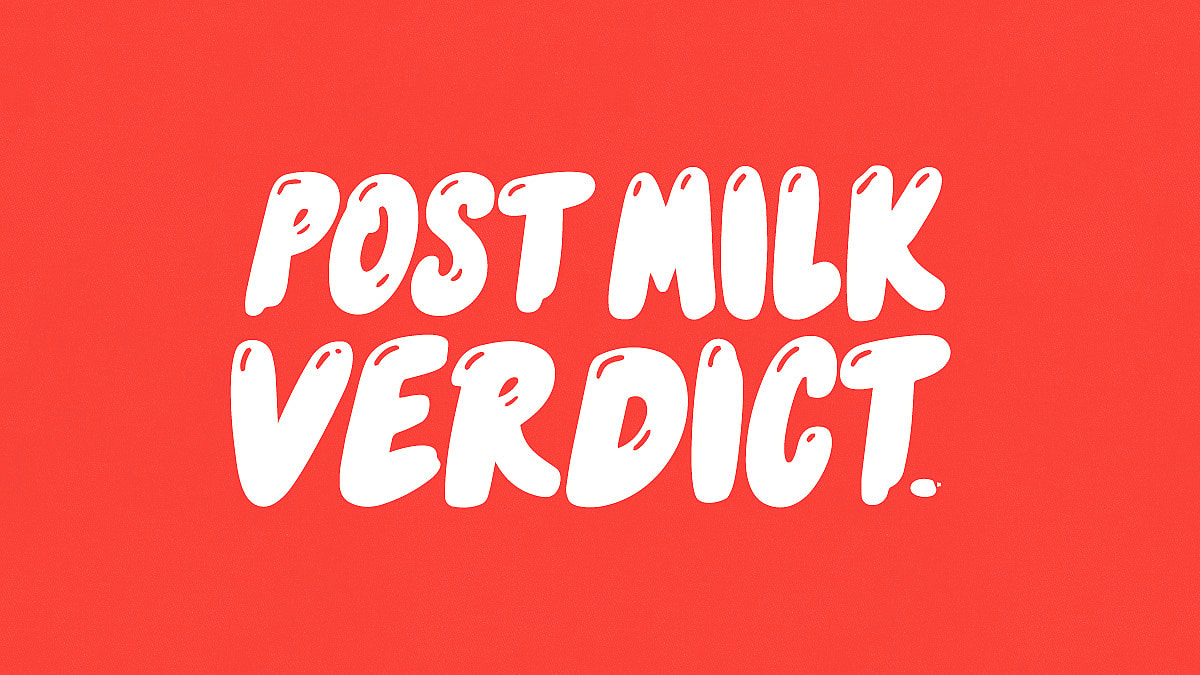
On 11 February 2026, the UK Supreme Court shut the door on Oatly’s “POST MILK GENERATION” mark for oat-based food and drink. The ruling is already being filed under “plant-based setback” and “dairy victory lap.”
But zoom out.
This isn’t just a legal moment. It’s a diagnostic moment for the entire category.
Because if your brand relies on the word milk to explain what it is, you don’t have a brand, you have a category description with a logo on it.
And the uncomfortable truth is: that’s how a lot of plant-based brands have been built.
Not as new staples…
…but as borrowed meaning.
Category borrowing is the softest form of positioning
For too long, plant-based has lived in the shadow of the cow.
We’ve used dairy’s words (“milk”), dairy’s rituals (the glass, the splash, the cereal bowl), dairy’s mental model (nutrition, wholesomeness, family), and dairy’s shelf shorthand. We’ve made it easy for shoppers by saying: “it’s basically milk, but not.”
That may have helped early adoption.
But it also locked the entire category into permanent second place.
Because as long as you are an alternative, you are a comparison.
And when you’re a comparison, you’re judged by someone else’s rules.
So yes, the court ruling hurts. But strategically? It’s a gift.
It forces plant-based brands to stop hiding behind the category’s borrowed language and finally build something proprietary.
The trap of “M*lk”, “Malk”, and other clever evasions
Watch what happens next.
You’ll see a flood of “M*lk”, “Malk”, “Mlkkk”, “Mylk”, and a frantic pivot to “Oat Drink” and “Plant-Based Beverage.”
These aren’t brand decisions. They’re legal concessions.
They are business-first moves designed to navigate regulation — not brand-first moves designed to capture belief.
The court’s logic is basically: if you’re using “milk” as a designation in relation to non-dairy products, you can’t do that — and the exception only helps where it clearly describes a characteristic (for example, “milk-free”).
Translation: clever isn’t enough.
And even if the workaround is technically legal, it’s still strategically weak. Because it trains consumers to look for the borrowed cue.
It says: “Don’t worry, we’re still basically milk.”
That might protect short-term conversion.
It also delays long-term brand building.
The real lesson: Found + Understood beat legal descriptors
If you want to win the next era of plant-based, stop obsessing over the word and start building a brand architecture that can stand without it.
This is exactly what Connect in FULL® is built to test.
Found: distinctiveness that works in under a second
If you removed every word from your pack — could someone recognise it instantly?
If the word “milk” was doing the heavy lifting, your distinctive assets aren’t.
Found is about visual anchors, behavioural signatures, sensory cues — consistent patterns that build instant recognition. If you’re not recognisable in under a second without a logo, you’re not Found.
Plant-based brands often over-invest in “explaining” (claims, descriptors, qualifiers) and under- stinctive shapes, colours, ownable layouts, rituals, typography with a backbone).
Legal language is fragile.
Distinctive assets compound.
Understood: intent that creates an instant feeling
The Supreme Court described “Post Milk Generation” as “oblique and obscure” in this context. Legally, that’s their point. Strategically, it’s ours.
Because if your brand needs the word “milk” to be understood, your intent isn’t doing its job.
Understood is where you stop describing ingredients and start creating meaning.
- “The ultimate morning fuel.”
- “The barista’s secret weapon.”
- “The calmer choice.”
- “The grown-up glass of something good.”
Those aren’t claims. They’re intent-led positions that tell me how to feel — and what role you play in my life — without leaning on dairy’s vocabulary.
This is the shift from category borrowing to proprietary identity.
Lived: frequency that makes you the default, not the backup
A lot of plant-based still behaves like an insurance policy:
- “When dairy runs out.”
- “When someone in the house is lactose intolerant.”
- “When you’re trying to be good.”
That’s not a brand. That’s a contingency plan.
Lived is about showing up consistently enough that people would notice if you went dark for a month. It’s mental availability built through repetition, recognisable patterns, and brand-led rituals.
If you want to become the staple, you need brand-led usage moments people repeat because they want to, not because they should.
Loved: brand magic — the unreasonable ace the category argues with the dairy lobby, someone should be building stories.
Loved isn’t satisfaction. It’s advocacy. It’s the moments people repeat to other people.
If your brand can’t use “milk” — fine. Create magic that dairy can’t copy:
- unexpected delight in the first sip
- rituals that make mornings feel better
- a barista-grade experience at home
- design details that say “we cared”
This is where brands stop acting like products and start earning love — the thing no court can regulate.
This is the same old mistake: optimising for safety, not belief
When organisations feel pressure, they default to what’s measurable, defensible, and easy to justify. That’s business thinking. And it’s exactly how brand equity gets quietly stripped out.
You see it everywhere: the “smart” decision that makes sense in a meeting and costs you meaning in the world.
Plant-based now has a forced choice:
- Keep fighting for dairy’s something that doesn’t need it
One path keeps you permanently compared.
The other lets you become the new default.
A Brands decision filter
If you run a brand in this category, here’s the filter to apply this week — not in a workshop, not in six months, now.
1) Remove the crutch
Take your pack, your ads, your website header.
Delete every borrowed dairy cue:
- “milk”
- “dairy alternative”
- cow-adjacent language
- “just like milk” comparisons
Ask: Do we still make sense?
If the answer is no, the problem isn’t the law. The problem is your brand architecture.
2) Prove Found in one second
Do a 1-second test with real humans:
- show the pack for one second
- remove all words if you can
- ask: “What brand was that?” and “What role does it play?”
If you can’t be recognised instantly, you’re not Found. And if you’re not Found, everything else is friction.
3) Write your “intent line” and enforce it
One sentence. No category language. No ingredient talk.
Intent → feeling.
Then use it as a decision rule:
- Does this build our feeling?
- Does this make us more distinct?
- Would we still do it if we weren’t allowed to say “milk” ever again?
Stop making workaround decisions and start making brand ones.
The bright side
The dairy industry can keep the word.
But they can’t own distinctiveness.
They can’t own intent.
They can’t own the future rituals people choose.
The “Milk” War Is Over.
Now the brand war begins, and it favours the companies brave enough to stop borrowing meaning and start building it.