
The Redesign Graveyard
Heritage brands keep tripping over their own rebrands.
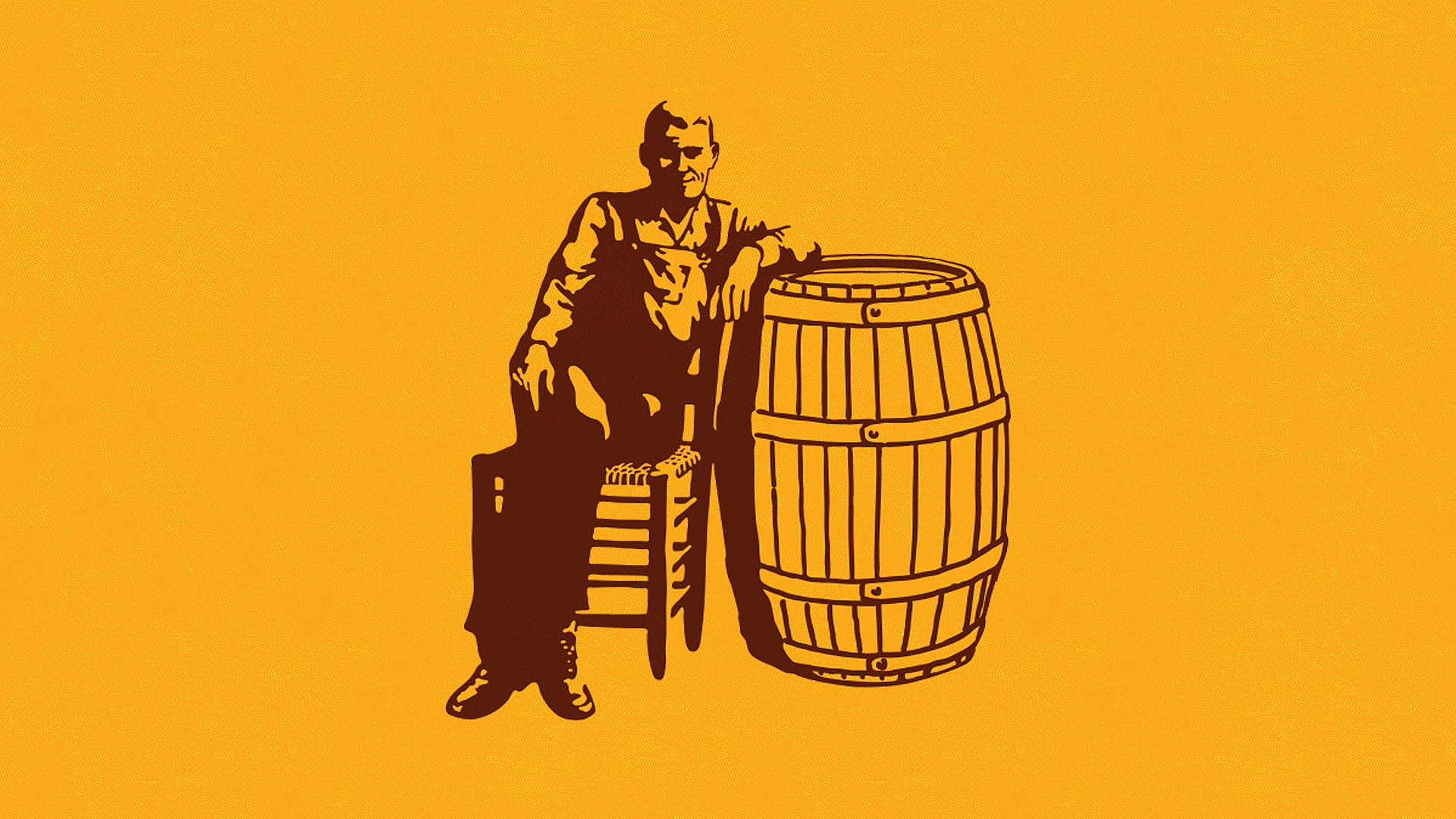
Cracker Barrel dropped Uncle Herschel and went wordmark-only — stock fell 11%. They reversed course in eight days.
Jaguar killed the growler. Tropicana’s 2009 redesign cost $50 million and 20% of sales in 30 days.
Gap’s 2010 refresh lasted six days.
Every few months, another beloved brand “modernises” — and forgets that heritage isn’t a problem to solve.
It’s an unfair advantage waiting to be re-energised.
When done with care.
⸻
Living Heritage, Defined
Living heritage isn’t about preserving the past.
It’s about letting what made you loved evolve with culture.
Heritage gives you trust. Design gives you today.
The art is keeping both alive.
⸻
The Behavioural Reality
Heritage isn’t nostalgia. It’s psychology.
Richard Shotton calls it the nostalgia bias — we don’t just remember the past fondly; we overvalue it.
That’s the mere-exposure effect at work: the more we see something, the safer and better it feels.
Heritage brands have decades of that exposure built in.
But “familiar” doesn’t mean “frozen.”
Most brands protect the logo, the colours, the lock-up, and forget the thing people actually remember: the feeling.
⸻
Values > Versions
New Coke proved the danger.
Taste tests said it was better. Consumers agreed. Then America revolted, not against flavour, but against a break in values.
Converse learned the same with Chuck II: better cushioning, worse sentiment.
Nike learned it the right way. When it revived the 1986 Air Max “Big Bubble” — celebrating a manufacturing flaw, sales beat forecasts by 17%.
The rule: protect the values, refresh the version.
⸻
When Care Creates Lift
Sprite revived “Obey Your Thirst” in 2019. Thirty years old. Sales rose 9%.
Not because people remembered it, but because the feeling still mattered.
LEGO doesn’t redesign the brick. It redesigns what you can build with it.
Guinness doesn’t change the pour. It changes who’s holding the glass.
That’s heritage as a living system, not a museum piece.
⸻
What We Learned on Starburst
At Straight Forward, we saw this firsthand when reimagining Starburst’s identity.
We didn’t start from scratch, we started from what people already loved. The product context: the square, and the cultural context: the stack.
The square became the hero to build a bold, joyful system around. Distinctive on shelf, flexible across 26 markets, and resilient enough for consumer generated assets.
Heritage drove the core. Culture drove the variation.
That’s the generation effect in action: people value what they help create. When fans can play with your codes without breaking them, you stop being a logo — you become culture.
⸻
Three Modern Moves
Walmart (2025)
Kept True Blue, Spark Yellow, and the spark itself. Message: “Still Walmart, just better equipped for now.”
Sandals (2025)
“Made of Caribbean” reframes heritage from time to place.
Lloyds Bank (2024)
250 years, one black horse. Modernised for motion and digital life. Trust didn’t fade — it evolved.
⸻
The Glance Test
Can someone recognise you in seconds from six feet away?
On shelf. On scroll. At 60 mph.
If not, you’re not being nostalgic. You’re being invisible.
Living heritage doesn’t whisper.
It shouts — in a way that feels like you.
⸻
The Cracker Barrel Test
Here’s how you know you got it wrong.
You modernised the poster, not the system.
You changed the wrong things, kept the wrong rigidity.
Cracker Barrel stripped away familiarity. Uncle Herschel, warmth, without building anything flexible in its place.
That’s not modernisation. That’s amputation.
⸻
The New Rules
1. Name your living asset.
What would the world draw from memory? The square. The spark. The black horse. Protect it — then exaggerate it.
2. Values over versions.
Don’t change the product to look modern; change how the values show up. Nike didn’t redesign the swoosh. It redesigned who wears it.
3. Build a flexible system, not a fixed poster.
Create rules that invite variation, colour fields, motion behaviours, modular grids. Systems scale; posters date.
4. Design for the generation effect.
Let community co-author the memory, collabs, zines, AR lenses, remixable codes. Shared ownership multiplies meaning.
5. Translate rituals, don’t reference eras.
Show how your product is used now. Hennessy moved from “neat in a leather chair” to “cocktails with Teyana Taylor.” Heritage evolving, not eroding.
⸻
The Billion-Dollar Reality
Starburst proved a square can travel decades with new energy.
Sprite proved a 30-year-old tagline can lift sales 9 %.
Nike proved a manufacturing flaw can drive +17 % when values stay intact.
Across FMCG, brand equity now drives roughly 20 % of market cap, and heritage brands 50 + years old grow 30 % faster when they activate heritage strategically (source: Bain / Kantar meta-study).
The problem isn’t heritage. It’s treating it like a trophy instead of a tool.
⸻
The Payoff Curve
Modernising heritage takes time before the lifts show.
You won’t see it in Q1. But when you protect the values, build the system, and let culture play, the advantage compounds.
That’s what done with care really means.
So next time someone says, “We need to modernise our brand,” ask:
Which part?
The poster — or the system?
The logo — or the feeling?
Because only one of those makes people reach for you again.
And when they do, that’s living heritage.
⸻
If your brand has heritage worth modernising — or you’re building something new that needs to feel timeless — let’s talk about how to make it work harder.
Brands succeed when they’re Found, Understood, Lived and Loved. Connect in FULL®.