
Why Costco’s hot dog is the cleanest brand strategy ever written.*
Brands don’t have a value problem. They have a conviction problem.
Not always. Not everywhere. But often enough to matter.
When growth gets harder, the instinct is to explain value more loudly. Sharper targeting. Better personas. Clearer messaging. More reasons to believe.
All useful.
But explanation only gets you so far.
At some point, people stop listening to what a brand says and start noticing what it does.
The problem isn’t that brands are bad at explaining value. It’s that too many have stopped doing valuable things.
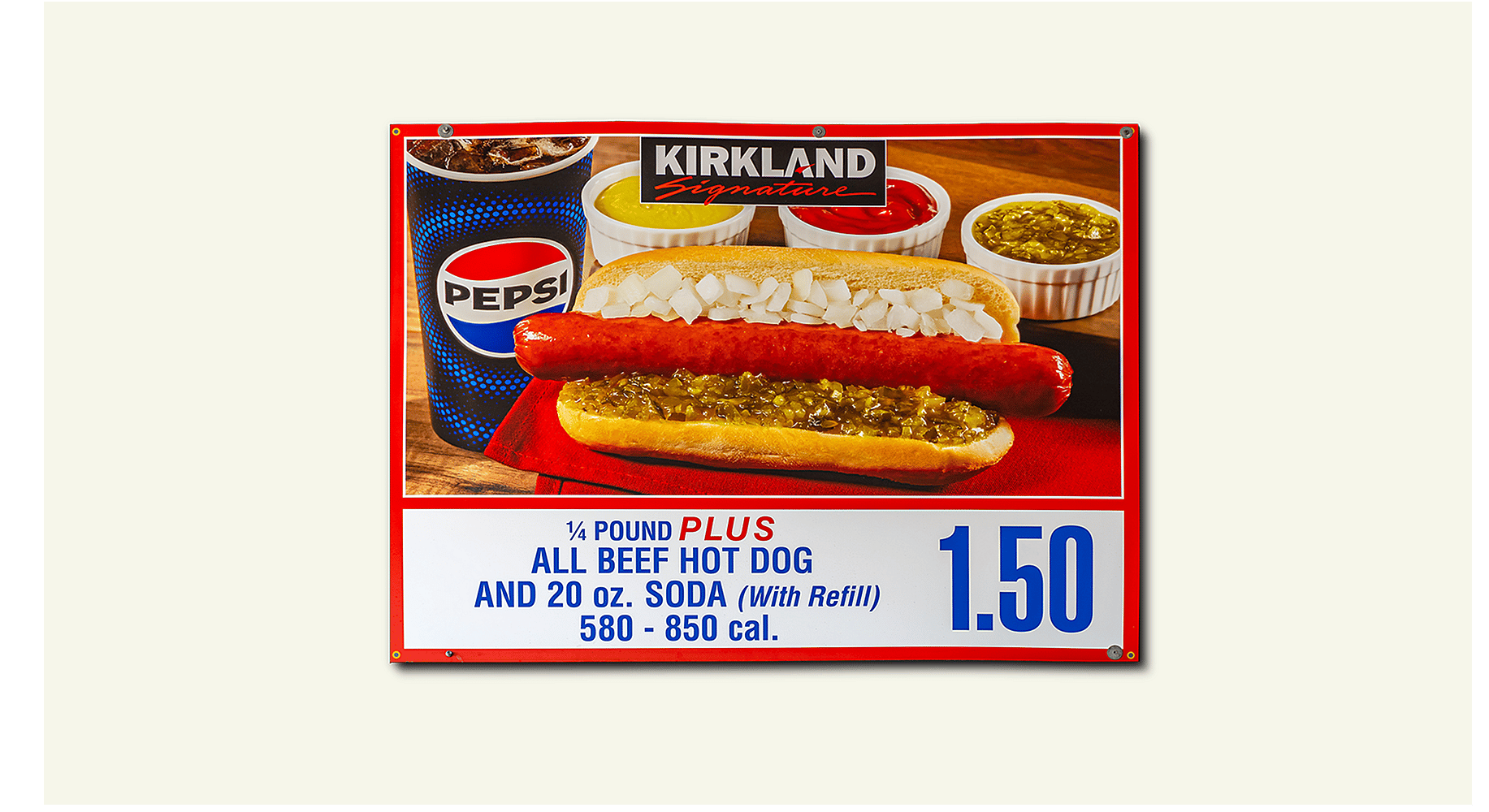
And the proof costs a dollar fifty.
The hot dog that won’t move
Costco’s hot dog and soda combo has cost $1.50 since 1985.
Inflation has touched everything around it. Rent. Beef. Mustard. Buns. Wages. The dollar itself has lost roughly two thirds of its value over those four decades.
The hot dog hasn’t moved.
The story most often told: a former CEO, Craig Jelinek, told the founder Jim Sinegal that the maths no longer worked. Sinegal’s reply has become folklore.
“If you raise the f*ing hot dog, I will kill you. Figure it out.”
That’s not a pricing strategy. That’s a brand decision so loud you can hear it from the car park.
What the dashboard would say
Run the hot dog through any modern decision-making system and you get one answer. Raise it.
The margins are upside down. The ingredient costs alone justify a move. Costco has protected the price through four decades of inflation and cost pressure. The data would support a change. The board would approve it.
A spreadsheet would say the move is rational.
A brand leader would know it’s radioactive.
The hot dog isn’t a transaction. It’s a signal. It tells every member, every shift, every visit: we’re on your side, and we don’t break the deal.
It’s not something you test. It’s something you should know to protect.
Affordability, value, and meaning are not the same thing
The “value translation” argument collapses three different things into one word.
Affordability is a price calculation. Can I pay this?
Value is a worth calculation. Am I getting more than I gave?
Meaning is something else entirely. It’s what the price tag says about you when no one’s looking.
The hot dog is all three. But it’s the third one that built Costco.
Plenty of retailers are affordable. Plenty offer value. Only one of them has held the line on a hot dog for forty years to prove a point about who they are.
The Chipotle counter-example
Chipotle has just launched a “Power Up” promotion with $2.50 tacos.
On paper it looks like the same play. Cheap food. Open arms. A signal to everyone the brand recently alienated by publicly leaning into its high-earning customers.
It isn’t.
The taco is a price promotion. The hot dog is a principle.
Power Up may be a smart commercial test. But it’s still a test. It runs in selected markets, at selected times, for a selected window. That makes it a tactic, not a promise.
The hot dog can’t be quietly killed. It would take a piece of the brand with it.
That’s the difference between a brand decision and a business tactic. One is protected by conviction. The other is protected only as long as the quarterly review allows.
The whole brand in one decision
Costco does with a hot dog what most brands struggle to do with a full brand platform.
It’s found — a distinctive asset. Nothing in retail looks like the food court at the end of the warehouse, anchored by a price that hasn’t moved since the year *Back to the Future* came out.
It’s understood — the price is the message. We’re on your side. Membership means something. No copy required.
It’s lived — a ritual. Every visit. Every store. Decades unchanged.
It’s loved — an unreasonable act of care that turns customers into storytellers. Nobody posts about value translation. They post about hot dogs.
The test
Every leadership team has a hot dog somewhere. Some small, illogical, expensive thing the brand does because it’s who we are.
The free guacamole. The lifetime guarantee. The unboxing moment. The way the team answers the phone. The line in the contract that costs you money but earns you trust.
The thing the spreadsheet would kill in a heartbeat.
Here’s the test.
Under pressure, does it still prove something the brand cannot afford to lose?
If yes, protect it.
If no, change it or kill it.
A brand decision isn’t a romantic excuse for bad economics. It’s a disciplined choice to protect the things that create trust, memory and meaning.
The trick is knowing the difference between a cost, a tactic and a promise.
Stop translating. Start proving.
Value translation helps people understand what you stand for. Brand decisions prove whether you meant it.
That’s the gap most brands fall into. Smarter targeting won’t fix it. Sharper personas won’t either. Even better explanations of value will only get you so far.
The brands that win won’t be the ones who explain value best. They’ll be the ones brave enough to keep proving it.
A hot dog isn’t a price point. It’s a promise.
Connect in FULL®.