
Last week my kids (13 and 10) spotted Crocs’ latest product: phone cases. Ugly, hole-punched, charm-covered phone cases. And they loved them.
It reminded me of a holiday when my eldest forgot his Crocs. We were on a tiny island and I thought there’d be no chance of finding replacements. But we did. The real magic wasn’t buying new shoes — it was the shop assistant handing over a giant bag of Jibbitz charms and letting the kids pick whatever they wanted. That moment of generosity created a memory far stronger than the product itself.
Crocs turned ridicule into ritual. Mocked as “the world’s ugliest shoe,” they now generate over $4 billion in annual revenue by embracing distinctiveness, empowering self-expression, and letting fans co-create the story.
⸻
Polarisation is Power
The business-first instinct would have been to redesign the shoe. Make it slimmer. More stylish. Blend in.
Crocs chose the brand-first path: lean into what made them different. And they had every reason to play it safe. By 2016, they were branded among TIME magazine’s “50 worst inventions” ranking alongside New Coke and asbestos insulation.
This defiance isn’t new. Back in 2005, Crocs ran a national campaign that said the quiet part out loud: “Ugly Can Be Beautiful.” It reframed the debate and, more importantly, made the silhouette non-negotiable.
Instead of apologising, they got confident. CMO Heidi Cooley put it plainly: “We are very confident being ugly. We’ve been ugly since 2002 and have no intent to change that silhouette.”
Rather than chasing haters, they doubled down on lovers — people who prized comfort, authenticity, and individuality. CEO Andrew Rees admitted the tension was useful: “Our goal is not to make the haters love the brand. It’s to exploit that tension because it creates PR, media, and interest — things that would cost a fortune to buy otherwise.”
⸻
From Product to Philosophy
The 2017 “Come As You Are” campaign reframed Crocs from footwear to identity. It told stories of self-acceptance with Drew Barrymore, John Cena, and YOONA — linking physical comfort with emotional confidence.
The brand purpose “making everyone comfortable in their own shoes” gave people permission to be weird. Crocs stopped being a joke. They became a badge.
⸻
Gen Z Made Them Cool (By Making Them Theirs)
High-fashion collabs helped, sure. Christopher Kane took them to London Fashion Week. Balenciaga sold $850 platform Crocs that disappeared before launch. Suddenly, ugly wasn’t embarrassing. It was insider cool.
But celebrity partnerships only worked because they were real. Post Malone wore Crocs before he was paid to. His collaborations, along with Justin Bieber and Bad Bunny’s, sold out in minutes because fans can smell authenticity.
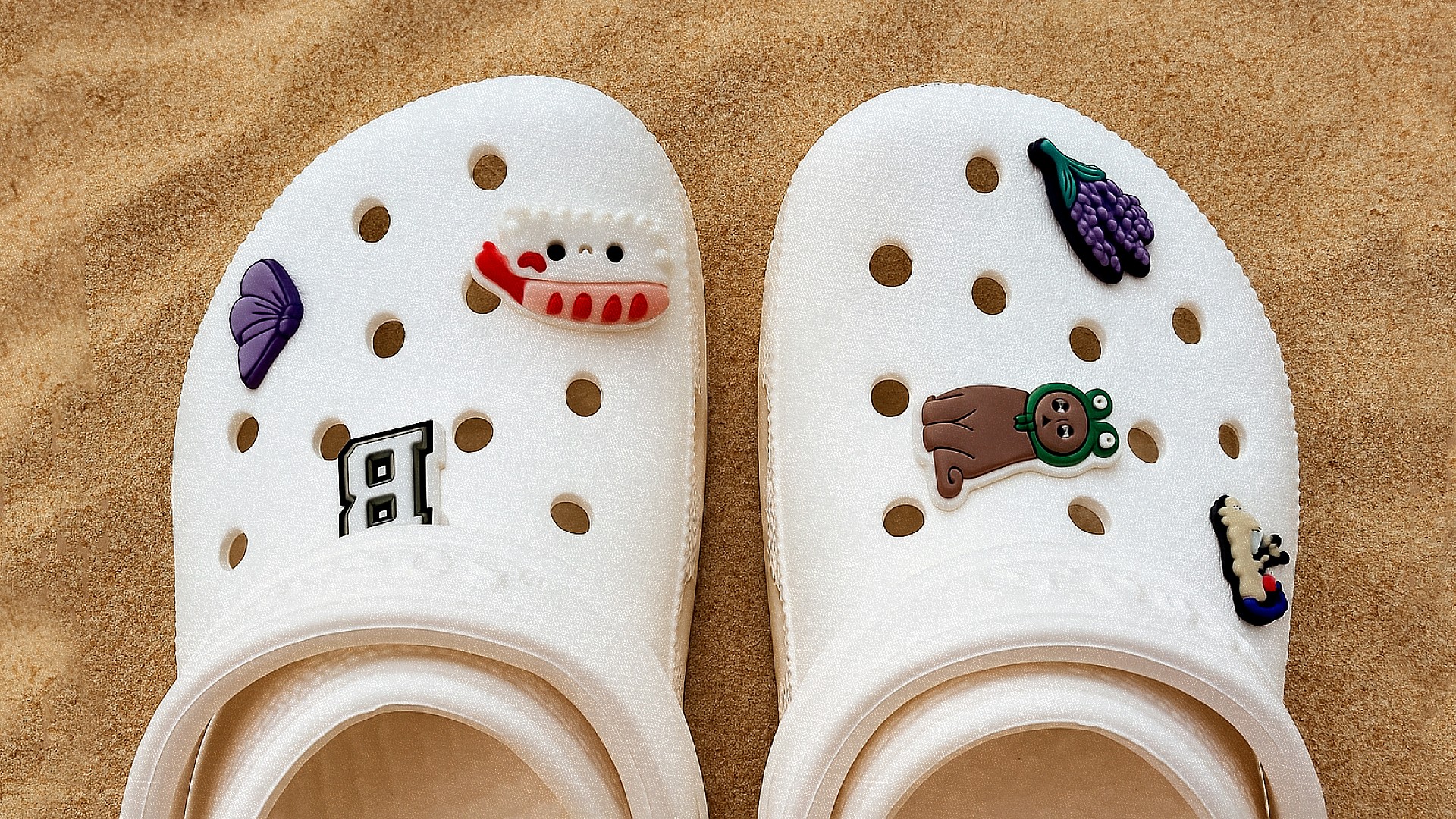
Here’s what really shifted things: Gen Z prizes self-expression over conformity and customisation over uniformity. Crocs’ 500+ Jibbitz charms made every pair a canvas. One researcher called them “wearable memes” shareable, ironic, instantly recognisable. Perfect for a generation raised on remix culture.
Crocs didn’t control the story on social. They watched what fans were already doing and turned up the volume. The #Crocs hashtag hit 3.2 billion views. #ThousandDollarCrocs generated 95 million views in 36 hours. #StrapBack reached 7.3 billion views with 18.5% engagement.
Kids weren’t just buying shoes. They were broadcasting identity.
The logical business move for Crocs would have been to smooth out their edges, redesign the silhouette, and compete on conventional beauty. The creative brand move was to double down on ugliness, reframing it as authenticity, self-expression, and status. That “illogical” decision turned out to be the most profitable one.
⸻
From Shoes to Systems
What started as clogs is now an entire ecosystem. Jibbitz alone generates over $270M a year. Phone cases bring the same ugly-cool aesthetic to tech. Collaborations keep coming — from KFC chicken-scented charms to McDonald’s Grimace clogs that sold out in ten minutes.
And now: M&Ms Characters wearing Crocs.
Think about that for a second. Crocs have become the brand that validates other brands. M&Ms — one of the most recognised icons in consumer culture, is borrowing cool from a shoe that TIME magazine once compared to asbestos. The joke became the punchline, which became the validator. That’s not just a comeback. That’s a complete cultural flip.
⸻
Back on that island, my daughter filled her first pair of Crocs with charms. A cat. A butterfly. A piece of sushi. They looked ridiculous. She was delighted.
That’s the real strategy. Crocs didn’t win by making better shoes. They won by giving people permission to make the shoes their own.