
The Luce backlash isn’t really about electric cars. It’s about how far a brand can stretch before the magic’s gone.
Ferrari built an electric car. The internet buried it before lunch.
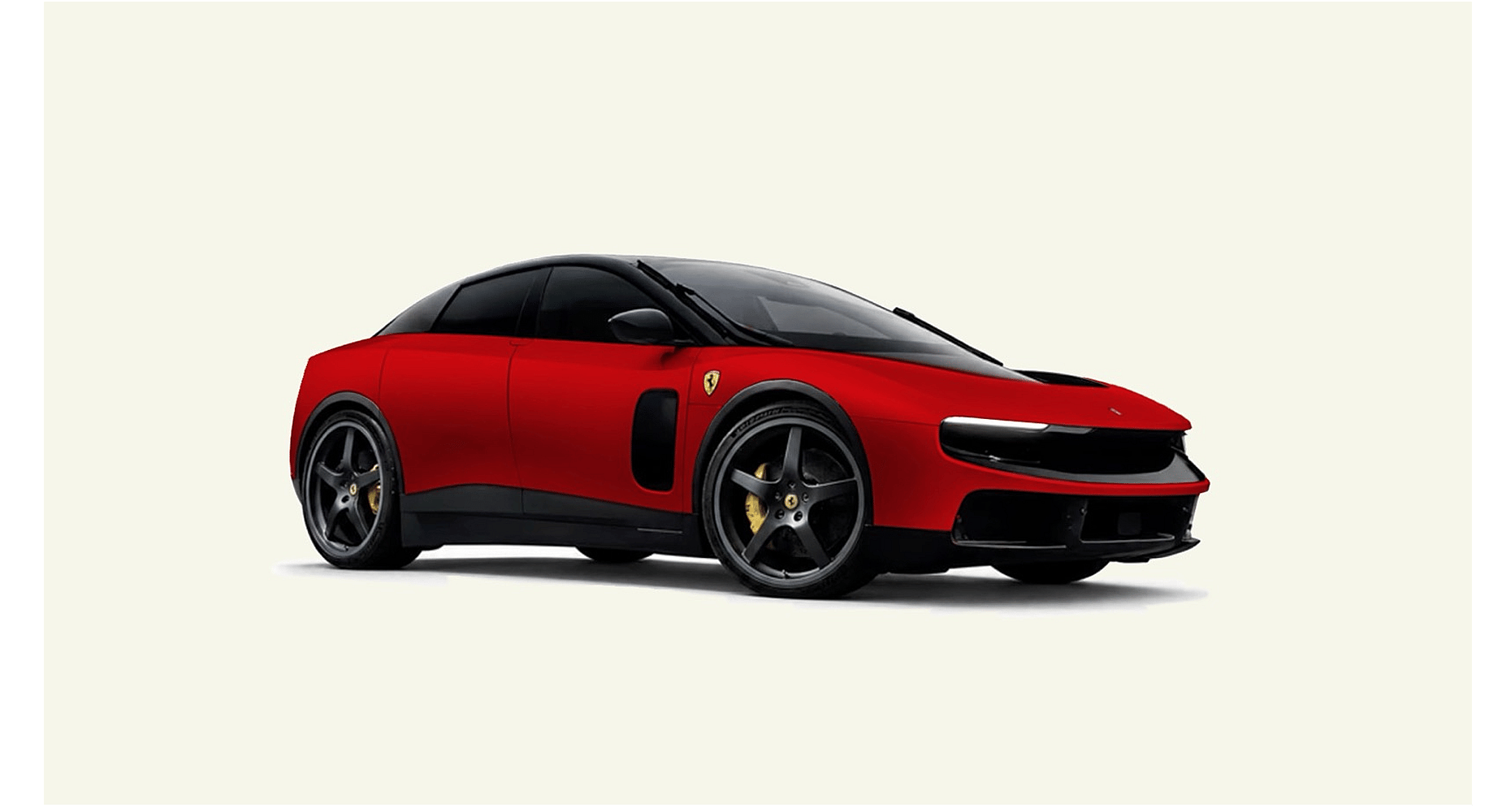
The first all-electric Ferrari, the Luce, landed to a pile-on. Teslarrari. The Apple Leaf. The death of Ferrari. Even Luca di Montezemolo — the man who turned Ferrari into a luxury house — reportedly wants the badge taken off it.
Strong reaction. Here’s the trap: a strong reaction isn’t a verdict. It’s a mood. And we keep mistaking the two.
The launch told us one thing. The Luce is divisive. It hasn’t told us the thing that matters: whether the right buyers want it, keep it, and talk about it with pride. There’s an early signal. Ferrari showed it to 1,600 customers, opened the order books, and says payments are already landing, with fuller numbers due in July. But a signal is all it is. The honest position isn’t “it failed.” It’s “ask me when the people who own ten Ferraris have voted with their money.”
And this isn’t really a story about an electric Ferrari. It’s a story about what happens when a brand moves into new territory and everyone starts defending the wrong thing.
So start with what “it” even is. Because almost everyone — fans, press, half the design world — is arguing about a car that was never built for them.
It’s not the poster Ferrari. It’s the Ferrari for the rest of the household.
Look at who actually buys Ferraris. In 2024, around 81% of new ones went to existing owners. Nearly half went to people who already owned more than one. The core customer isn’t shopping for a dream. The dream’s in the garage, under a cover, driven twice a year.
What they don’t have is a Ferrari for the dull stuff. The school run. The airport. The pint of milk. That job currently goes to a Tesla, a Range Rover, an S-Class, and Ferrari sees none of that money.
The Luce is the sensible one. The Ferrari for the everyday journeys Ferrari has never owned. Not the fastest, not the rarest, not the one you leave to your kids. A very good runaround from a brand that’s never offered you one.
It’s not replacing the F40 poster on the bedroom wall. It’s replacing the Range Rover outside the kitchen door. That isn’t dilution. It’s a journey worth real money that Ferrari was completely absent from.
They’re defending a powertrain and a vibe
“But it doesn’t look like a Ferrari.” Look like which one?
Ferraris don’t share a face. Line up a Daytona, a Testarossa, an F40, a Purosangue and the 12Cilindri and they have almost nothing in common: no grille signature, no family silhouette, no shared grammar to betray. Unlike Porsche, where everything wears the 911’s features, Ferrari has never run a house style.
So “it doesn’t look like a Ferrari” has no anchor. There’s no fixed thing it’s failing to resemble. The recognition was never in the metal. It’s in the badge, the red, the noise, the myth, the moment you see one in the wild. The car is almost a blank the brand pours meaning into.
Which means the people shouting “this isn’t a Ferrari” aren’t defending a design language. They’re defending a powertrain and a vibe. And the powertrain was never the whole value. It was one way Ferrari delivered the feeling. When a Tesla hits sixty quicker than the supercar, speed has stopped being scarce, so the feeling has to come from somewhere else: touch, control, theatre, craft. Ferrari’s own line is that the brand was never defined by what powers it. On that, they’re right.
They’ve run this play before. In the late sixties Ferrari built a smaller, cheaper, V6 car for a new kind of buyer, and didn’t even put the Ferrari name on it. They called it Dino. Purists sniffed. Not a real Ferrari. Today it’s one of the most loved cars the company ever made.
The crowd’s busy mourning the machine. The dream’s getting into a different car.
How far can a badge stretch?
That’s the real question, and it’s bigger than Ferrari: how far can a brand reach into new territory before the thing that made it valuable starts to thin?
It worked for Porsche. When the Cayenne arrived, the faithful called it a betrayal, an ugly SUV with no business wearing the crest. Now SUVs are most of Porsche’s business, and here’s the part that matters: the Cayenne didn’t kill the 911. It funded it. The sensible car carried the volume so the icon could stay rare.
Jaguar is the bet still in the air. It didn’t add a room. It rebuilt the whole house, resetting the brand in one move. The production car arrives later this summer, so nobody yet knows whether it lands. But that’s the contrast that counts. Ferrari is adding a room with the house left standing. Jaguar tore the house down to build a new one. Same surface move, reinvention, opposite stakes.
Ferrari’s gamble sits between those two. And the risk isn’t the styling, the battery or the doors. It’s the badge. If the car is a blank and the badge does all the work, the badge has to carry more than it ever has. Which makes Montezemolo’s “take the prancing horse off it” either completely wrong, or the only thing worth saying.
The question is whether a prancing horse on the sensible car makes the sensible car special, or makes the horse less special.
What this means if you run a brand
Most leaders, at their own Cayenne moment, defend the wrong asset. They fight for the thing they can see, the shape, the sound, the pack, the flavour, because it’s visible, emotional, and the loudest customers are attached to it. Meanwhile the value that does the work sits somewhere they can’t point to.
Sometimes the format is the brand. Often it’s just the vessel. The hard job — the only one that matters when you move into a new world — is knowing which is which.
- Separate the value from the vessel. What must never change is rarely the thing people photograph.
- Don’t confuse fans with customers. Fans defend the myth. Owners test the value. Future buyers reveal the growth. The loudest voices at launch are usually fans, and they may never buy the thing. The real jury is the buyer with three Ferraris in the garage and a Range Rover doing the boring work. Don’t let the people who won’t buy it decide whether it should exist.
- Know whether you’re protecting the icon or funding it. Both are real jobs. Confusing them is how you freeze into irrelevance — or blow up the thing that made you.
Ferrari may have got the Luce wrong. We won’t know for a while.
But the question it forces is the right one.
When a brand moves into new territory, what actually has to come with it?
Not everything. Not the whole past. Not every ritual, format, feature or code.
Just the thing that carries the value.
Find that. Protect it. Let the rest evolve.