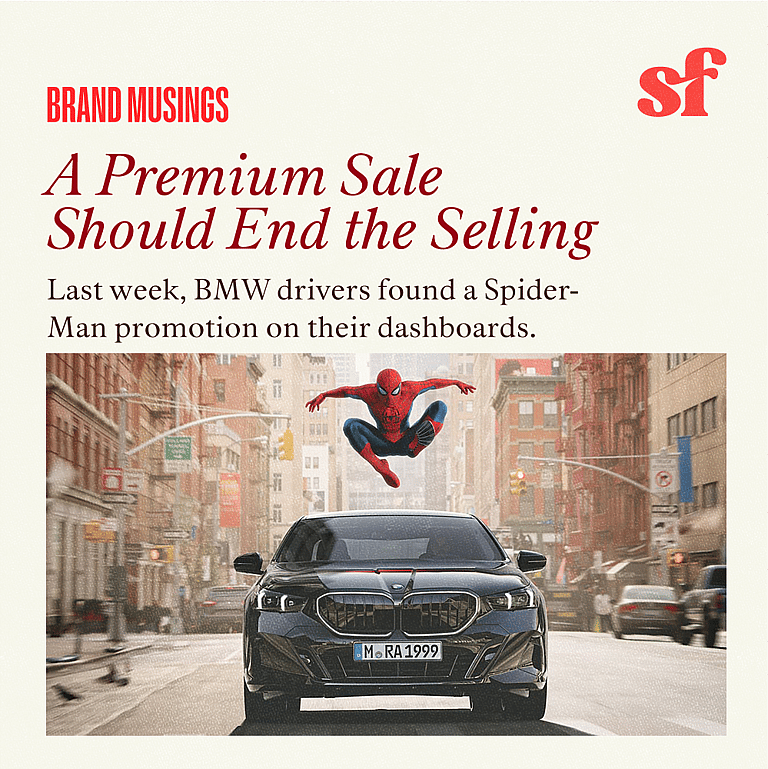

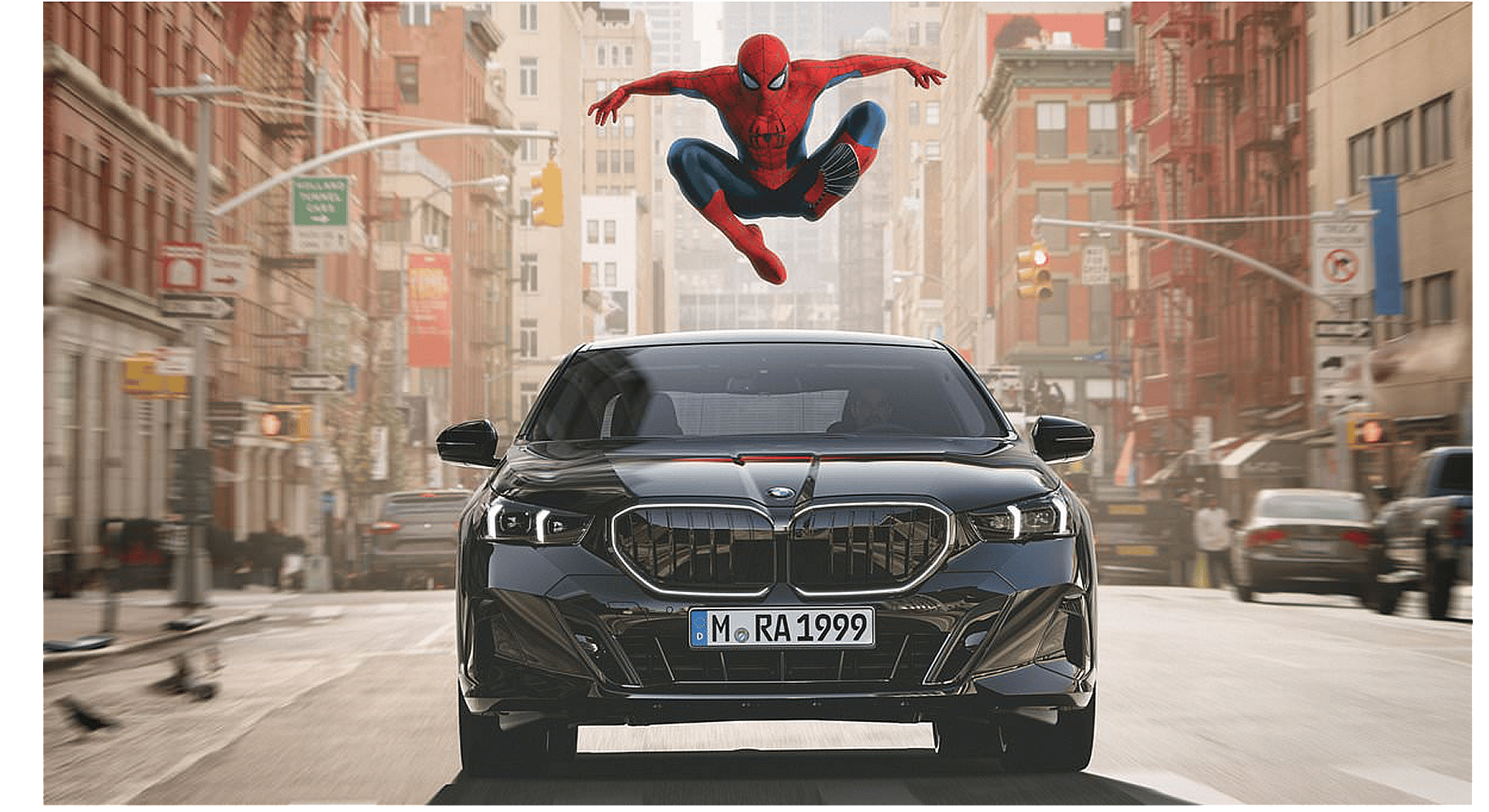
Last week BMW found itself in the headlines after drivers discovered a Spider-Man promotion appearing on their dashboards.
It reminded me of something Apple did over a decade ago.
In 2014, millions of Apple customers found U2’s latest album had magically appeared in their music library. Apple called it a gift. Many customers saw it as something that had been forced upon them.
Different companies. Different products. The same mistake.
Both forgot the promise they had already sold.
This is no small thing.
What a premium price pays for
Every purchase contains an unwritten value exchange. Buy a budget airline ticket and you expect to be offered priority boarding, seat upgrades and snacks. Buy a low-cost smart TV and you accept that part of the economics may be funded by advertising.
The lower upfront price comes with compromises. You don’t have to like them. But the deal is clear.
Premium works differently.
When someone spends £80,000 on a BMW or over £1,000 on an iPhone, they aren’t simply buying better engineering. They’re buying freedom from compromise. They’re paying to avoid interruptions. They’re paying for things to work beautifully. They’re paying for the confidence that every interaction has been designed with them in mind, not the company’s next quarterly target.
That’s what the premium is for.
Premium doesn’t mean the selling can never continue. It changes the burden of proof. The next interaction has to feel like added value, not an intrusion.
When premium products behave like ad platforms
Increasingly, though, many premium brands seem to have forgotten.
Apple now uses its products to promote Apple TV+, Apple Music, Apple News+, Apple Arcade and more. BMW uses the dashboard to promote entertainment. Across the technology world, products that once felt complete increasingly behave like platforms looking for their next revenue opportunity.
Individually, none of these decisions feels catastrophic. Collectively, they change the relationship.
The business sees another opportunity to monetise a customer. The brand sees another opportunity to delight one.
Those sound like competing priorities. They aren’t.
What BMW could have done with Spider-Man
Imagine if BMW had taken exactly the same Marvel partnership and approached it differently.
Instead of treating drivers’ dashboards as advertising space, what if they’d hidden an Easter egg for owners to discover? A subtle Spider-Man icon tucked away in iDrive. Find it and your dashboard transforms. The ambient lighting changes. You unlock exclusive artwork, behind-the-scenes content or a Spider-Man-inspired start-up sequence.
No interruption. No forced promotion. Just a reward for being part of the club, if you want to be.
Owners would have shared it voluntarily. The internet would still have talked about BMW. But the conversation would have been, “Have you found it yet?” rather than, “Why is this in my car?”
The business objective doesn’t change. The brand decision does.
The business wanted another impression. The brand could have created another story.
Business decision or brand decision?
That’s the difference between a business decision and a brand decision.
The business asks, “How else can we generate revenue from this customer?”
The brand asks, “How do we justify the trust they’ve already placed in us?”
Neither question is irrational. But they lead to very different outcomes.
One optimises the next transaction. The other compounds the relationship.
That’s why this matters.
After the sale comes the proof
A premium brand isn’t defined by what it charges before the sale. It’s defined by how it behaves afterwards.
The sale should mark the end of persuasion and the beginning of proof.
Every interaction should reassure customers that they made the right decision. Every notification, recommendation and new feature should answer a simple question: Does this improve the experience they’ve already paid for?
If the answer is no, perhaps you shouldn’t do it.
In 2011, introducing iCloud email, Steve Jobs made a point of saying it would contain “no ads”. Apple built products it wanted to use itself, he said, and simply didn’t want advertising in them.
Whether every decision today lives up to that philosophy isn’t really the point. The philosophy itself was sound.
Once you’ve earned the sale, your job changes. You’re no longer trying to convince someone to buy. You’re proving they were right to.
The strongest premium brands understand this instinctively. They don’t treat every customer interaction as another chance to extract value. They treat it as another chance to create it.
Because the premium isn’t just what people pay. It’s what they expect in return.
And expectations, once broken, are remarkably difficult to rebuild.
So before the next revenue opportunity lands on your desk, ask yourself two questions.
Will this make us more loved, and will the customer feel served or sold to?